

In 2009, on Hajógyári Island in Budapest, in the southern part of the Great Island (Nagy-sziget), the central area of a larger estate was excavated. The area was surrounded by a large, trapezoidal water-filled ditch. Inside the ditch, postholes belonging to surface-level wooden structures, smaller drainage channels, pits, stone-lined wells, and large storage pits were unearthed. North of the ditch stood the remains of a building with stone foundations, including a stone-lined cellar in its southwestern corner. The features were not in use simultaneously: based on the fill, the settlement was already inhabited in the 13th century, but it was completely destroyed by the end of the 15th century.

Photo of the excavated kiln
One of the most significant objects of the excavation was a large, oval kiln used for firing ceramics, dating to the second half of the 15th century, which had been dug into the fill of the already abandoned ditch. The pottery kiln belongs to the single-chamber, bottom-draught type: hot air flowed between openings at its two ends, and its circulation was aided by a stone-reinforced bench that probably also functioned as an air channel. The kiln floor was barely fired at all, and only the inner 5–6 cm of the wall plaster showed signs of firing—suggesting that it was used only briefly, for a maximum of two or three firings. Unfortunately, the associated workshop was not found, but both the kiln fill and a nearby pit yielded fragments of vessels that were unique at the site in terms of their material, shape, and decoration. Both the vessel types and decorative elements are known individually from the Middle Ages and from different periods: the potter selected motifs from a wide chronological range, adapted them according to his skill and taste, and was not primarily aiming to produce the standard vessel types typical of the period.

Aerial photo of the excavation area
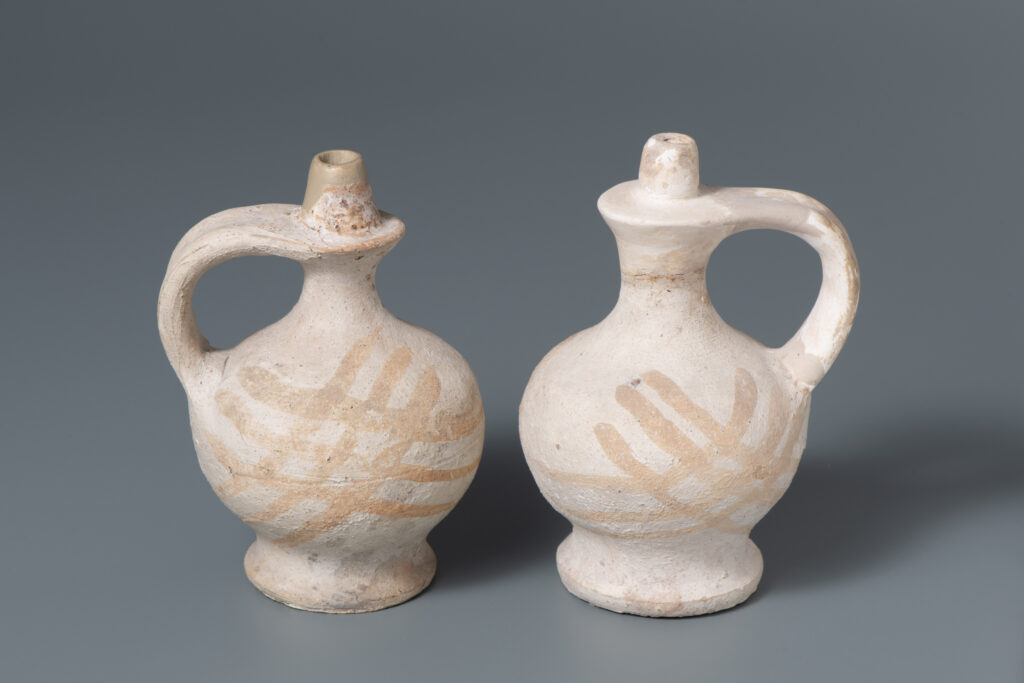
One of the vessels produced here in the second half of the 15th century is this egg-shaped liquid container with a handle arching over the body and a spout, which in its details resembles the glazed Austrian imported ceramics used in the 13th–14th centuries.

Drawing of the kiln

Misfired vessels in situ
Archaeologist: Anikó Tóth
Text, excavation photos, and drawings: Anikó Tóth
Aerial photo: Gábor Rákóczi
Artifact photos: Ákos Keppel
1 Month – 1 Artifact | 2026
A Medieval Falcon Find from Buda Castle
Herbs, kitchen garden plants, and vegetables from from well No. 8 of Teleki Palace
Feeding vessels

The Mystery of a Footed Bowl

Medieval Cresset Stone
